ARA-290 Peptide and Nociception
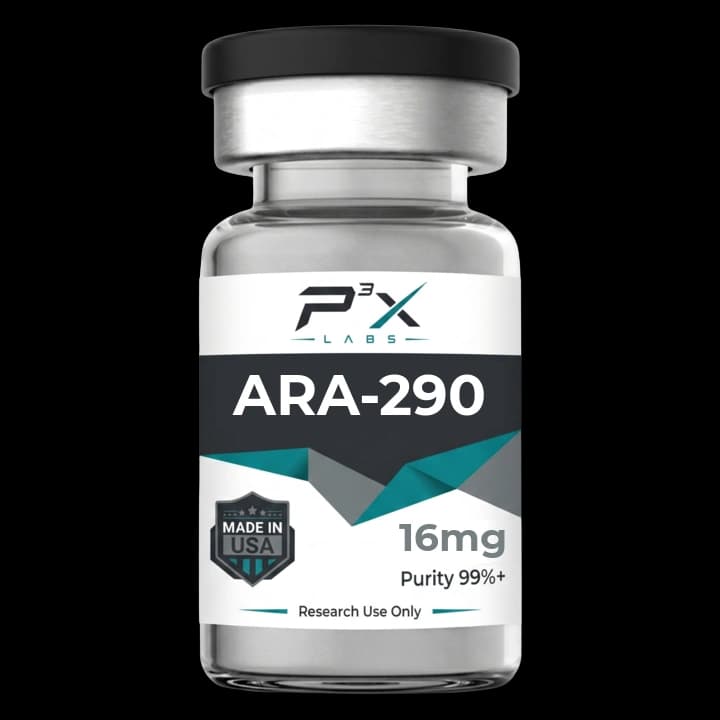
Scientists consider that Transient Receptor Potential (TRP) channels may be the primary nociceptive stimulating channels, including possible thermal, chemical, and mechanical stimuli. In the presence of such a causative agent, one of the TRP channels, namely TRPV1, may be triggered. Upon activation, it might induce the ejection of neuropeptides, which then are considered to generate action potential in the nervous systems.
Study Design
This action potential is referred to as "nociception." A 2016 study suggested that ARA-290 peptide may have the potential to increase the threshold of this TRPV1 channel, with researchers further implying that the peptide might inhibit the TRPV1 actions and thereby no neuropeptides will be released to spark a nociceptive response. The researchers conducted a study with a C57/BL6 strain of murine models to investigate this hypothesis. They took neurons from two areas of the murine nervous system, the dorsal root ganglion, and the trigeminal ganglion, and studied them using calcium imaging. This involved the introduction of a special dye to the cells that lights up when calcium is present and then examining them under a special microscope. The experiment measured how these neurons potentially reacted to three substances: ARA-290, capsaicin (the compound that makes chili peppers hot), and KCl (a common chemical compound that can be used as a control). The researchers were particularly interested in whether ARA-290 could reduce the reaction of the neurons to capsaicin. They also did some direct tests on the murine models. One test measured how potentially sensitive the murine models' appendages were to nociception.
Proposed Mechanism
They used different concentrations of ARA-290 or a control solution on the murine models' hind appendages. Then, they exposed them to capsaicin to see if it made them potentially more sensitive to nociception. They used a tool to apply pressure to the appendages and measured the point at which the murine models pulled their appendages away. Another test checked how often the murine models withdrew their appendages over 24 hours after exposure to capsaicin. Here, the researchers were evaluating whether giving the murine models ARA-290 after the capsaicin may have affected their sensitivity to nociception. Thus, the findings suggested that ARA-290 might specifically block the reaction of neurons to capsaicin without affecting other types of heat sensors. This may suggest that ARA-290 targets specifically the TRPV1 channels and might potentially increase the amount of capsaicin needed to activate these channels. ARA-290 is still being actively studied for its possible role in nociception "mitigation". However, researchers have also developed hypotheses about its other potential mechanisms of action, such as potential anti-inflammatory and possible immunomodulatory impact.