CJC-1295 DAC Peptide Mechanism of Action
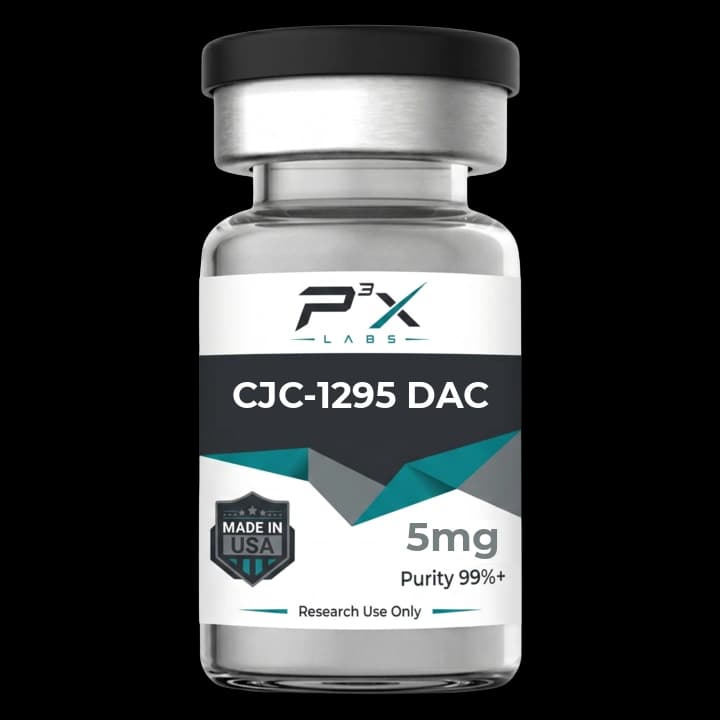
conducted two clinical studies in 2006 to examine the action of CJC-1295 DAC. In the first study, CJC-1295 DAC or a placebo was presented in one of four ascending concentrations. In the second study, CJC-1295 DAC was presented repeatedly at a single concentration.
Proposed Mechanism
According to the results, after the introduction of CJC-1295 DAC, there appeared to be an increase in GH and insulin-like growth factor-1 (IGF-I) levels among the research models. CJC-1295 DAC is thought to elevate levels of IGF-1 by increasing growth hormone production, which in turn may bind to receptors on liver cells, potentially triggering a cascade of intracellular signaling processes. This binding might activate the Janus kinase-signal transducer and activator of the transcription (JAK-STAT) signaling pathway.
Key Observations
Subsequently, the activated STAT proteins might migrate to the nucleus, where they may attach to specific DNA sequences considered to be response elements, potentially resulting in the transcription of the IGF-I gene. It is theorized that the IGF-I produced in liver cells may be transported to various target tissues. Additionally, it is believed that many tissues possess GH receptors, which, upon activation, may lead to the production of IGF-I within the tissues themselves.
Key Findings
IGF-I is considered a potent hormone that may play a key role in promoting growth, suggesting it mediates many growth and anabolic effects of growth hormone. It is hypothesized to encourage cell growth and proliferation, as well as the enlargement and strengthening of tissues and organs, possibly aiding in protein synthesis and cellular expansion. Preliminary exposure to CJC-1295 DAC in experimental models has been suggested to significantly affect average growth hormone levels, with studies reporting an apparent increase of 2- to 10-fold for 6 days or possibly longer.