
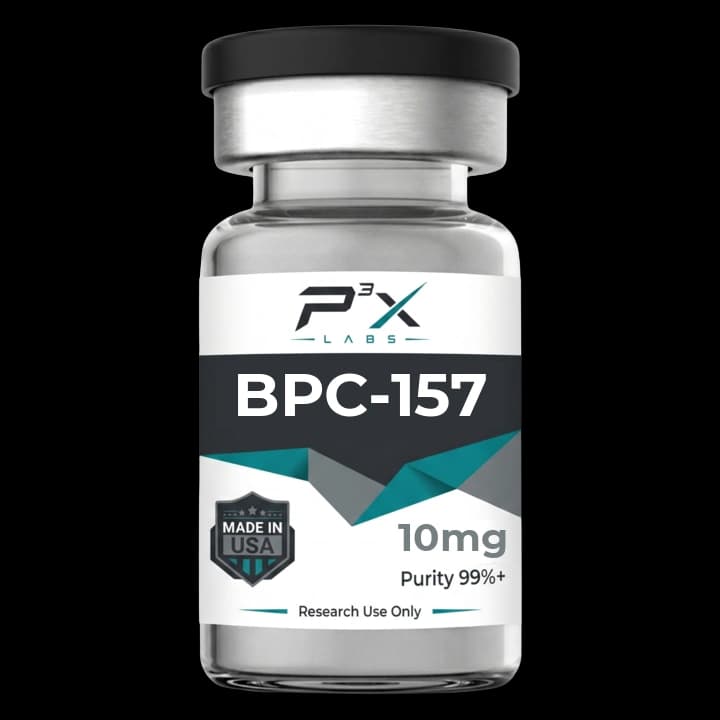
BPC-157 Peptide and Wound Healing
In a study, three experimental murine models were used - first with skin tissue wounds, second with colon tissue anastomosis, and third with synthetic sponge implantation. A portion of the murine models were presented with a placebo, whereas others were presented with the BPC 157 peptide. After the study, all models were histologically examined.
Study Design
The researchers reported that the BPC-157 murine models appeared to exhibit higher numbers of collagen, reticulin, and blood vessel development than the ones in the control group. In a particular study, researchers explored the theory that the peptide BPC-157 might potentially hasten wound healing compared to a control group. This hypothesis was rooted in observing possible improvements in several key areas of wound healing. These included the formation of new granulation tissue, which is critical in the healing process, along with reepithelialization. In this process, new epithelial cells form to replace those damaged by the wound. Additionally, there was an observation of potential improvements in dermal remodeling, a phase where the skin regains strength and elasticity, and collagen deposition, crucial for tissue repair. The study also suggested that BPC-157 might have enhanced the expression of vascular endothelial growth factor (VEGF) in the injured skin tissues. VEGF is a significant protein that promotes blood vessel growth, vital to healing damaged tissues.
Proposed Mechanism
The researchers further speculated that the peptide could have influenced umbilical vein endothelial cell proliferation (HUVECs). These cells line the blood vessels and are considered to be integral to forming new blood vessels during wound healing. Additionally, there was a conjecture about a noticeable increase in the migration of HUVECs. This observation was based on results from wound healing assays, tests designed to measure various aspects of wound healing. The presence of BPC-157 might have led to an increased expression of VEGF-a, a variant of VEGF, and consequently accelerated the formation of vascular tubes in a laboratory setting. Moreover, the study hinted at the possibility that BPC-157 might influence the activity of specific proteins and enzymes involved in cellular signaling pathways. Specifically, it seemed that BPC-157 could regulate the phosphorylation level of extracellular signal-regulated kinases 1 and 2 (ERK1/2). Phosphorylation is a process that activates or deactivates many protein enzymes and is a crucial step in sending signals within cells. The affected enzymes, ERK1/2, along with their downstream targets, including c-Fos, c-Jun, and Egr-1, are believed to play significant roles in cell growth, migration, and angiogenesis, which is the development of new blood vessels.